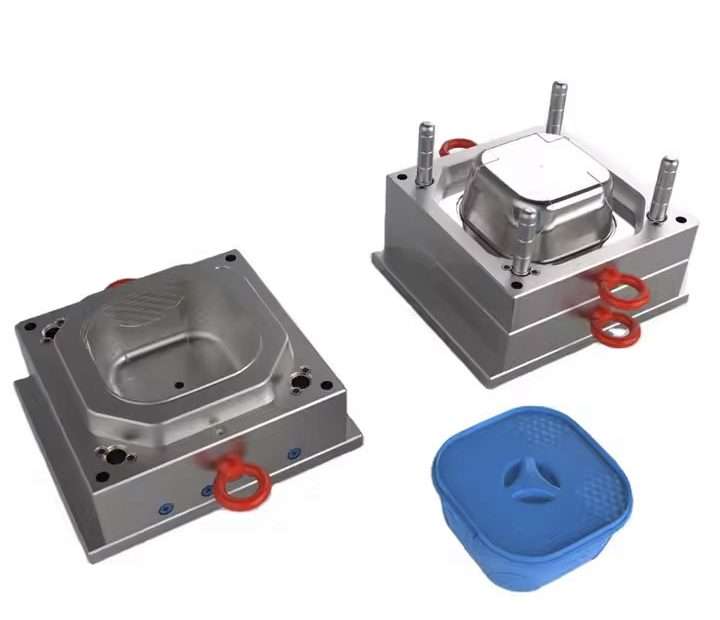
As living standards improve and health awareness grows, more families are focusing on food storage and preservation. Food storage containers, as a common kitchen item, have gained popularity due to their excellent sealing and convenience. The design and manufacturing quality of the molds used for making these containers directly impact the product’s quality and market competitiveness.
Design of Food Storage Container Molds
Food Storage Container Molds Design Principles
- Functionality: The mold design must meet the basic functional requirements of the container, such as sealing and durability. Sealing is one of the most important functions of a food storage container, so the mold design must ensure a tight fit between the lid and the body; durability requires that the mold material has sufficient strength and wear resistance to withstand daily wear and tear.
- Aesthetics: The mold design should focus on the appearance, ensuring the container has an attractive shape and color scheme. Different colors and patterns can be chosen to meet various consumer aesthetic preferences. Additionally, surface polishing can be considered to make the container smoother and shinier.
- Economic Efficiency: The mold design should aim to reduce production costs while ensuring quality. This can be achieved by optimizing mold structure and selecting cost-effective materials. For example, a split mold design can break down complex molds into simpler parts for processing, or cost-effective materials like ABS plastic can be chosen.
Food Storage Container Molds Design Steps
- Market Research: Understand market demand and analyze competitors’ products to provide references for design. Information can be collected through online searches and field surveys to understand the types, prices, and functions of current food storage containers in the market. Additionally, consumer feedback should be considered to better meet their needs.
- Conceptual Design: Based on market research, create a conceptual design for the container, including shape, size, and color. At this stage, sketches can be drawn or preliminary designs can be made using 3D modeling software. It’s important for the conceptual design to be innovative and practical to attract consumers.
- Detailed Design: Refine the conceptual design to complete the specific design of the container. This stage involves detailed design and calculations of including material selection, structural design, and processing techniques. The design also needs to be evaluated and optimized to ensure its feasibility and economic efficiency.
- Mold Design: Based on the container’s design, develop the mold design, including mold structure and material selection. This stage considers manufacturing processes and cost factors. Generally, mold design should be simple and clear for easy machining and maintenance, while also considering the mold’s lifespan and durability.
Manufacturing of Food Storage Container Molds
Material Selection for Food Storage Container Molds
Food storage container molds should use materials with good heat resistance, wear resistance, and corrosion resistance. Common mold materials include aluminum alloys, steel, and plastics. Aluminum alloy molds are lightweight and have good thermal conductivity but are costly; steel molds have high strength and wear resistance but are heavier; plastic molds are low-cost and lightweight but lack heat resistance and wear resistance. Therefore, when selecting mold materials, it’s essential to balance product performance requirements and cost considerations. Specifically:
- Aluminum Alloy: Suitable for applications requiring high thermal conductivity and lightweight design. Aluminum alloy has good thermal conductivity, which ensures uniform temperature distribution inside the container. Its low density reduces the overall weight of making it easier to carry. However, aluminum allloy is relatively expensive and difficult to machine.
- Steel: Suitable for applications requiring high strength and wear resistance. Steel has high strength and hardness, able to withstand significant pressure and impact. It also wears well, extending the mold’s lifespan. However, steel is heavy, inconvenient for carrying, and challenging to machine.
- Plastic: Suitable for low-cost and lightweight designs. Plastics have low costs and good malleability, allowing rapid production of various shapes via injection molding. They are also lightweight. However, plastics have poor heat resistance and wear resistance, prone to deformation or damage under high temperatures and friction.
Manufacturing Processes for Fresh-keeping box Molds
Material Selection for Food Storage Container Molds
Food storage container molds should use materials with good heat resistance, wear resistance, and corrosion resistance. Common mold materials include aluminum alloys, steel, and plastics. Aluminum alloy molds are lightweight and have good thermal conductivity but are costly; steel molds have high strength and wear resistance but are heavier; plastic molds are low-cost and lightweight but lack heat resistance and wear resistance. Therefore, when selecting mold materials, it’s essential to balance product performance requirements and cost considerations. Specifically:
- Aluminum Alloy: Suitable for applications requiring high thermal conductivity and lightweight design. Aluminum alloy has good thermal conductivity, which ensures uniform temperature distribution inside the container. Its low density reduces the overall weight of making it easier to carry. However, aluminum allloy is relatively expensive and difficult to machine.
- Steel: Suitable for applications requiring high strength and wear resistance. Steel has high strength and hardness, able to withstand significant pressure and impact. It also wears well, extending the mold’s lifespan. However, steel is heavy, inconvenient for carrying, and challenging to machine.
- Plastic: Suitable for low-cost and lightweight designs. Plastics have low costs and good malleability, allowing rapid production of various shapes via injection molding. They are also lightweight. However, plastics have poor heat resistance and wear resistance, prone to deformation or damage under high temperatures and friction.
Manufacturing Processes for Food Storage Container Molds
The manufacturing process of food storage container molds includes several steps:
- Mold Machining: According to the Food Storage Container Molds design drawings, perform machining processes such as milling, turning, and grinding. At this stage, various machine tools are used to process raw materials. For example, CNC machines can precisely mill aluminum alloy or steel; plastic molds can be formed via injection molding machines. It’s crucial to strictly control dimensions and surface quality during processing to ensure the final product’s quality and performance.
- Mold Assembly: Assemble the processed mold components to form a complete mold. This stage requires assembly and adjustment according to the design drawings. For example, components can be connected by bolts or fixed with adhesive glue. It’s important to ensure precision and stability during assembly and check for any missing or incorrectly assembled parts.
- Mold Testing: Test the assembled mold to check its working status and product quality. Multiple trial runs are conducted at this stage to observe the mold’s performance and product quality. If issues or shortcomings are found, they need to be adjusted and improved promptly. For example, adjusting temperature and pressure parameters or replacing unsuitable parts. Patience and attention to detail are required during testing, with each trial’s data recorded for subsequent analysis and experience summarization.
- Mold Acceptance: Inspect and accept qualified molds to ensure they meet quality requirements. This stage involves comprehensive checks, including appearance quality, dimension accuracy, and working performance. All aspects must meet standard requirements before the mold can be put into use. It’s important to strictly follow relevant standards and norms during acceptance, avoiding carelessness or perfunctory actions that could cause future production issues and losses.
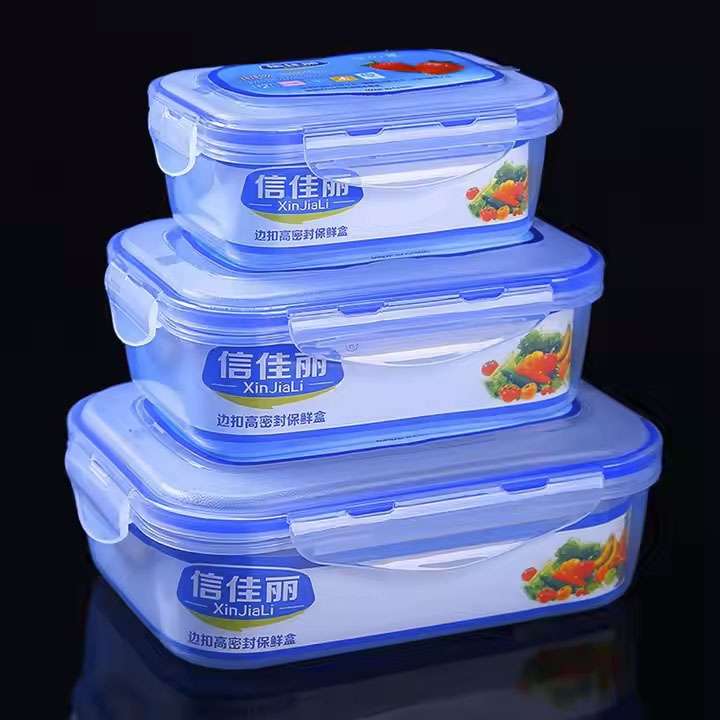
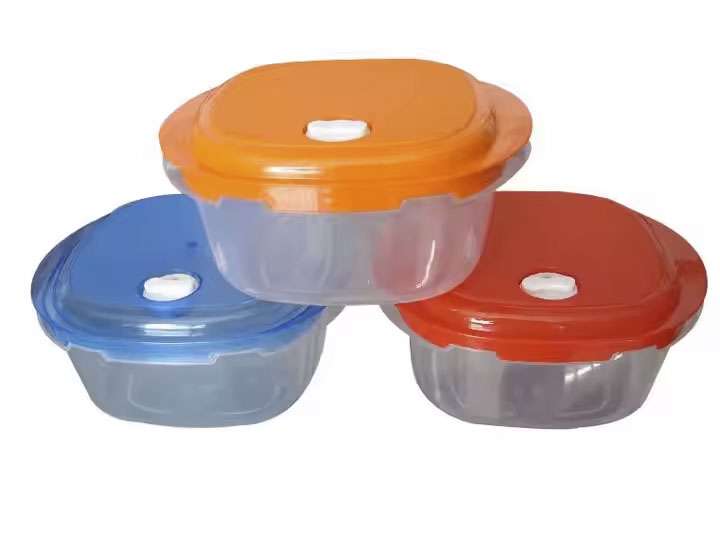
What is the tolerance range of the Food Storage Container Molds?
The tolerance range of molds depends on the design requirements and machining accuracy. Generally, the tolerance range for precision molds is between 0.01 mm and 0.05 mm. For some high-precision molds, the tolerance range can even reach the micron level (below 0.001 mm). The specific tolerance range needs to be determined according to the purpose and quality requirements of the product, and is also influenced by the mold materials and machining equipment.If you have specific requirements for a mold or product, please provide more details, and I can offer more precise information.
What are the methods for Food Storage Container Molds surface treatment?
The surface treatment of molds has various methods, mainly to improve the mold’s wear resistance, corrosion resistance, and service life. Here are some common mold surface treatment methods:
Chroming: By electroplating, a layer of chromium is formed on the mold surface, enhancing its hardness and wear resistance while increasing corrosion resistance.
Nitriding: The mold is placed in a nitrogen environment, and high temperatures are used to infiltrate nitrogen atoms into the mold surface, forming a hardened layer that improves wear resistance and fatigue resistance.
Heat Treatment: By heating and cooling processes, the internal structure of the mold material is altered to improve its hardness and mechanical properties. Common heat treatment methods include quenching, tempering, and annealing.
Chemical Plating: Through chemical reactions, a layer of metal or alloy coating is deposited on the mold surface without electrolytic conditions, improving its corrosion resistance and wear resistance.
Physical Vapor Deposition (PVD): Using PVD technology, a thin film is formed on the mold surface, increasing its hardness, wear resistance, and corrosion resistance.
Chemical Vapor Deposition (CVD): CVD technology uses chemical reactions to form a hard coating on the mold surface, enhancing its performance.
Laser Hardening: Laser beams are used to quickly heat the mold surface, followed by rapid cooling, increasing surface hardness while maintaining internal toughness.
Sandblasting: High-pressure airflow is used to spray abrasive materials onto the mold surface, removing surface oxide layers and impurities while increasing surface roughness, improving coating adhesion.
Polishing: Mechanical or chemical methods are used to polish the mold surface, enhancing its smoothness and appearance.
Electrical Discharge Machining (EDM): EDM is used to remove part of the mold surface material through electrical discharge erosion, achieving precision machining and repair.