
Plastic cable ties are essential tools in daily life and industrial applications, playing a crucial role in bundling, securing, and organizing wires and other items. The quality and performance of these cable ties are directly determined by the design and production Plastic Cable Tie Molds.
Design Aspects of Plastic Cable Tie Molds
The design of plastic cable tie molds is a complex and precise process that requires careful consideration of multiple factors to ensure the accuracy and efficiency of the molds.
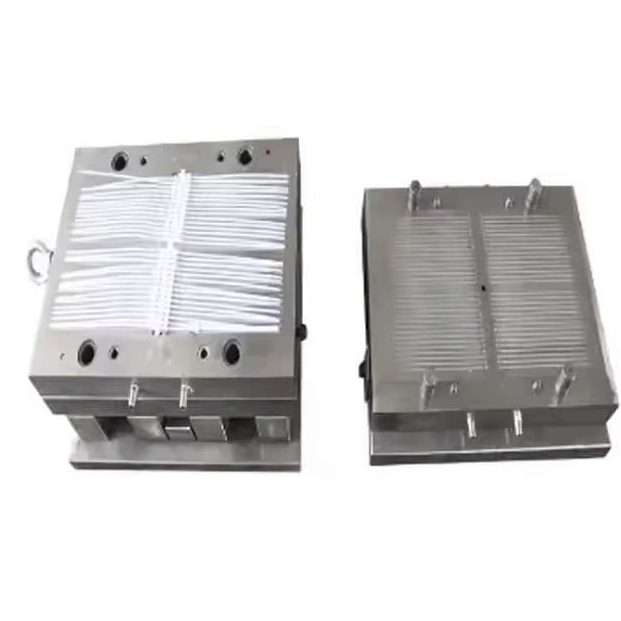
- Mold Structure Design:The mold structure includes the cavity, core, gating system, cooling system, and ejection mechanism. The design of the cavity and core determines the size and shape of the cable ties, requiring precise calculations and manufacturing. The gating and cooling systems affect the flow and cooling rate of the plastic, while the ejection mechanism ensures that the cable ties can be smoothly removed from the mold.
- Material Selection:The choice of mold material significantly impacts the mold’s lifespan and the quality of the cable ties. Commonly used mold materials include P20 steel, 718H steel, and S136 steel, known for their good wear resistance and corrosion resistance. These materials can withstand the high pressure and temperature during the molding process. Additionally, surface treatments like quenching and nitriding enhance the hardness and durability of the molds.
- Precision Requirements:Given the small size of plastic cable ties, high precision is crucial for mold processing. Every detail affects the final quality of the cable ties. This includes the cavity finish and the flatness of parting surfaces.High-precision machine tools and inspection equipment are essential to ensure that each mold component meets design specifications.
- Gating System Design:The gating system design must consider the flow and shrinkage of the plastic melt to ensure uniform filling of the mold cavity. Both cold runner and hot runner systems are used, with hot runner systems becoming increasingly popular due to their ability to reduce material waste and enhance production efficiency.
Production Processes of Plastic Cable Tie Molds
The production of plastic cable tie molds involves multiple steps, each requiring strict control to ensure the mold’s accuracy and quality.
- Mold Machining:Mold machining is a critical phase, utilizing methods such as turning, milling, grinding, and EDM. These processes require high-precision CNC machines to achieve the desired dimensional accuracy and surface quality of the molds.
- Heat Treatment:We use heat treatment processes like quenching, tempering, and nitriding. These enhance the hardness and strength of mold materials. These treatments improve wear resistance and lifespan. They reduce wear and deformation during use.
- Assembly and Debugging:Assembling and debugging the mold is the final step to ensure its proper functioning. Precise assembly of components and thorough testing and adjustments are necessary to meet design performance standards.
- Injection Molding:Injection molding is the primary process for producing plastic cable ties. The injection molding machine heats plastic pellets until molten. It then injects the molten plastic into the mold cavity under high pressure. The plastic cools and solidifies to form the cable ties. Controlling parameters is critical to quality. This includes injection temperature, pressure, and cooling time.

Application Fields of Plastic Cable Tie Molds
These molds produce plastic cable ties that see extensive use across various fields.Here are some major application areas:
- Wire and Cable Management:Widely used for bundling and securing wires and cables, plastic cable ties play a crucial role in electrical installations and maintenance, keeping wiring neat and secure to reduce electrical faults.
- Industrial Production:In industrial settings, plastic cable ties secure and bundle pipes, hoses, and other components, ensuring orderly and efficient production lines. They are indispensable in automotive manufacturing, home appliance production, and machinery assembly.
- Packaging and Logistics:In packaging and logistics, plastic cable ties are used to secure and stabilize goods during transportation and storage. Their simplicity and efficiency make them a preferred tool in these industries.
- Construction and Home Decoration:In construction and home decoration, plastic cable ties are used to secure pipes, wires, and decorative materials, facilitating construction and layout. They are particularly useful in installing air conditioners, securing curtains, and arranging wires.
How much weight can plastic cable ties hold?
The load-bearing capacity of plastic cable ties varies depending on the material and thickness. Generally, common plastic cable ties can withstand weights ranging from several hundred grams to several kilograms. For example, some high-strength plastic cable ties can support more than 1,000 grams. You should determine the specific load-bearing capacity based on the usage environment and cable type.
What is the difference between nylon cable ties and plastic cable ties?
Nylon cable ties are suitable for use in environments that require high loads and durability due to their high strength, abrasion resistance and weather resistance, while ordinary plastic cable ties have lower strength and are suitable for lightweight items and simple bundling applications indoors.