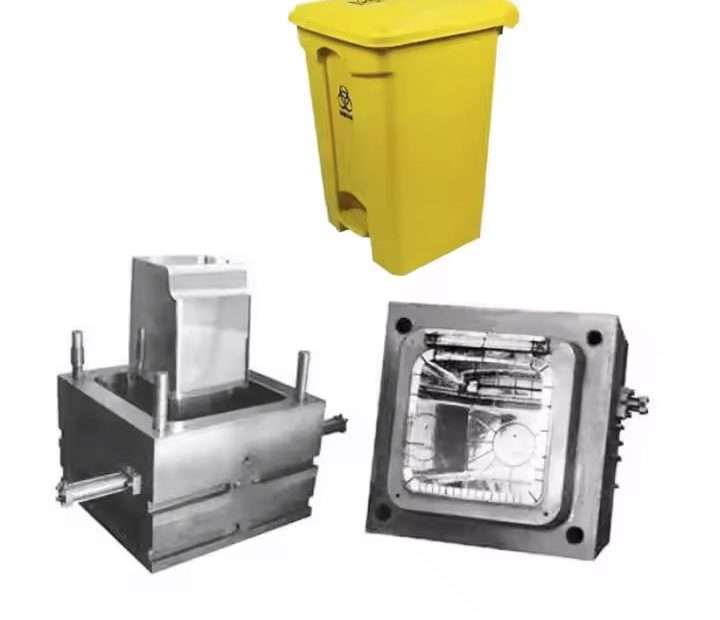
Public trash cans play an important role in daily life by keeping cities clean and promoting waste sorting and recycling. The design and manufacturing of public trash can molds are crucial steps in producing high-quality trash cans.
Public Trash Can Molds Design Principles
Structural Design We focus on practicality and durability when designing the structure of public trash cans. Our mold designers ensure the trash cans have enough capacity and stability while being easy to use and clean. We design the shape of the trash cans to include features like anti-tip and rainproof functions to withstand various outdoor weather conditions.
Aesthetic Design The aesthetic design of public trash cans is equally important. A beautifully designed trash can enhances the overall image of a city and encourages residents to use it. Our designers consider the shape, color, and surface texture of the trash cans to ensure they harmonize with the surrounding environment.
Human-Centered Design We prioritize user-friendly features in public trash cans, such as suitable height and opening size to accommodate users of all heights. We design the lids to be lightweight and easy to open while including anti-theft and animal-proof features. Our designers conduct thorough market research to understand user needs and continuously optimize design details.
Manufacturing Process of Trash Can Molds
The manufacturing process of trash can molds involves several crucial steps to ensure the final product’s quality and performance. Here are the detailed steps:
1. Trash Can Molds Design
Detailed Design: Our mold designers use Computer-Aided Design (CAD) software to create detailed designs, ensuring rational structure and precise dimensions. They consider all aspects of injection molding, such as runner design, cooling systems, and reinforcement ribs.
Simulation Analysis: We use Computer-Aided Engineering (CAE) to simulate and verify the design, ensuring feasibility and efficiency. This includes flow analysis, thermal analysis, and structural analysis.
2. Material Selection
Material Standards: We select high-strength, high-wear-resistant mold steels such as P20, H13, or S136 based on the mold’s requirements. These materials have excellent mechanical properties and corrosion resistance, capable of withstanding the high temperatures and pressures of injection molding.
3. Trash Can Molds Processing
Preliminary Processing: We cut, mill, and turn the mold steel to form the basic mold shape.
Precision Processing: We use CNC machines to achieve high precision in size and smooth surface. Common processes include milling, grinding, and EDM (Electrical Discharge Machining).
Heat Treatment: We perform heat treatments like quenching and tempering on the mold steel to enhance its hardness and wear resistance.
Assembly and Debugging: We assemble the processed mold parts and carry out debugging and calibration to ensure tight fitting and smooth operation.
4. Injection Molding
Injection Process: We heat plastic pellets until they melt and then inject them into the mold via an injection molding machine. The plastic cools and solidifies to form the various parts of the trash can. Injection molding is efficient and cost-effective.
Mold Maintenance: During injection molding, we regularly maintain the molds by removing residual plastic and impurities to prevent wear and damage.
5. Surface Treatment
Coating Treatment: We apply coatings to the plastic trash cans to improve corrosion resistance and appearance. Common methods include spraying, dipping, and thermal transfer printing.
Polishing Treatment: We polish the metal molds to enhance the surface finish, reduce friction, and extend the mold’s lifespan.
6. Quality Inspection
Dimension Inspection: We use precision measuring tools to inspect the trash can’s dimensions, ensuring they meet design specifications.
Appearance Inspection: We check the trash can’s appearance to ensure smooth surfaces without cracks, bubbles, or other defects.
Functionality Testing: We perform functionality tests to ensure the trash can’s stability and reliability in actual use.

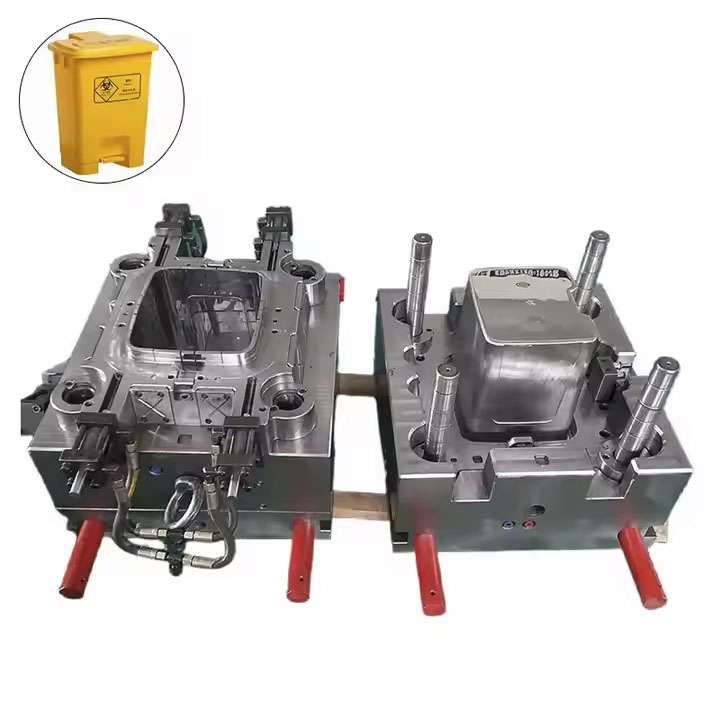
Market applications
Urban Public Facilities Public trash cans are a vital part of urban infrastructure, widely used in streets, parks, squares, stations, and communities. High-quality trash cans keep environments clean and raise public awareness of cleanliness.
Commercial and Office Areas Public trash cans are essential in commercial districts and office buildings. High-quality trash cans enhance the corporate image, provide a clean work environment, and promote employee health and productivity.
Schools and Hospitals Schools and hospitals need numerous public trash cans to maintain hygiene. Well-designed, durable trash cans improve waste sorting and management efficiency, protecting the health of students and patients.
Tourist Attractions In tourist attractions, public trash cans must be practical and aesthetically pleasing to match the environment. High-quality trash cans enhance the site’s overall image and attract more visitors.
Can the Public Trash Can Molds be customized?
Our factory specializes in customizing trash can molds of various sizes, specifications, and colors to meet the diverse needs of our clients. We design and produce large-capacity commercial trash cans, compact and convenient household bins, and environmentally-friendly options in specific colors and functions according to your exact requirements.With advanced equipment and an experienced technical team, we ensure the precision and quality of every mold. Our services cover the entire process from concept design to final production, dedicated to providing efficient and reliable solutions for our customers.
>>You may also like
Standards & References
The following industry standards are referenced in this article: