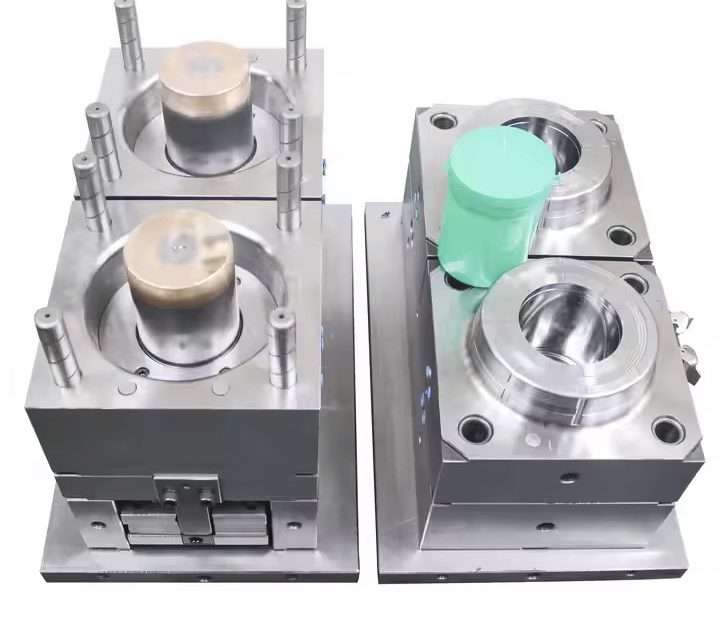
Paint buckets are essential packaging containers in the paint and coatings industry. The design and application of paint bucket molds have seen continuous innovation with changing market demands and technological advancements.
Design of paint bucket mold
Functional Design: Paint buckets primarily store and transport paint, so we must ensure their structural robustness and sealing during the design phase. Our mold designs guarantee that paint buckets can withstand certain pressures and impacts while preventing leakage and contamination. The design of the bucket lid is particularly crucial, as it needs to provide excellent sealing to prevent evaporation and leakage.
Aesthetic Design: Besides being functional, paint buckets must also be aesthetically pleasing. Modern consumers have higher expectations for product appearance, so we need to consider color, shape, and surface treatment when designing molds to enhance the product’s visual appeal. Additionally, clear presentation of brand logos and product information is a key aspect of the design.
Safety Design: Safety is a crucial factor in paint bucket mold design. We avoid sharp edges and corners in the design to prevent users from getting injured during handling and use. The chosen materials must be non-toxic and harmless, complying with relevant environmental and safety standards.
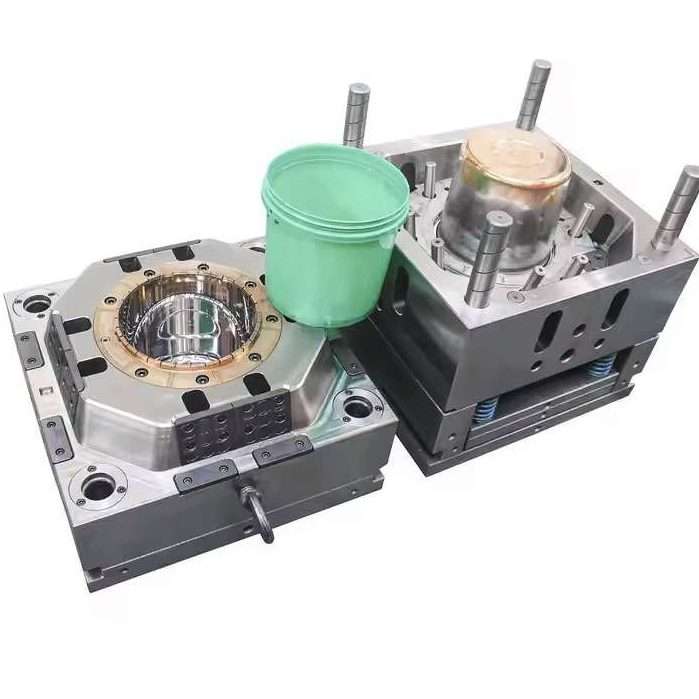
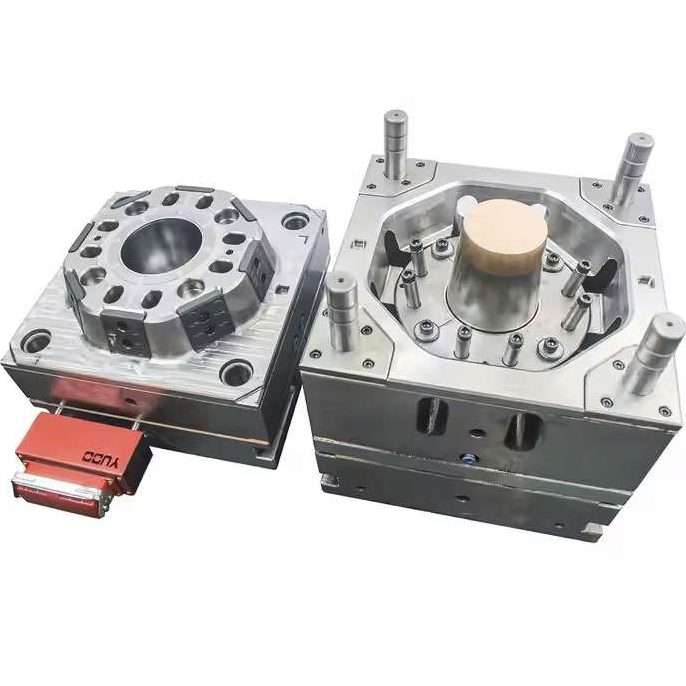
Manufacturing Processes
Mold Design: Mold design is the first step in making paint buckets. Designers use Computer-Aided Design (CAD) software to detail the shape, size, and structure of the paint bucket. Simulation analysis ensures the rationality and feasibility of the design.
Mold Processing: Mold processing is the core step in the manufacturing process. Common processing methods include CNC machining, Electrical Discharge Machining (EDM), and wire cutting. These advanced processing techniques ensure the high precision and surface finish of the mold, enhancing the quality and performance of paint buckets.
Injection Molding: Injection molding is the primary method for producing plastic paint buckets. We melt plastic pellets at high temperatures and inject them into molds, forming paint buckets after they cool and solidify. Injection molding offers high production efficiency and low costs, suitable for mass production.
Surface Treatment: Surface treatment enhances the aesthetic and durability of paint buckets. Common methods include painting, electroplating, and coating, which improve the appearance and increase the corrosion resistance and wear resistance of the paint buckets.
Quality Inspection and Debugging: After mold manufacturing, strict quality inspections and debugging are necessary. Using high-precision measuring equipment ensures that the mold’s dimensions and surface quality meet design requirements. If issues are found, adjustments and optimizations are made until the mold reaches optimal condition.
Gate Locations and Types for Paint Bucket Molds
In the design of paint bucket molds, the location and type of gates are crucial factors that directly impact the quality and efficiency of plastic injection molding. Here is some information about gate locations and types for paint bucket molds:
Gate Locations
Bottom Gate: We often place the bottom gate at the center of the paint bucket’s bottom. This design helps the plastic flow evenly within the mold, reducing deformation caused by cooling shrinkage. Additionally, the bottom gate facilitates later product trimming and removal.
Side Gate: The side gate is positioned on the side of the paint bucket, typically used for large or complex molds requiring multi-point injection. This gate location shortens the flow distance, ensuring the plastic fills the entire mold cavity uniformly, improving product quality and consistency.
Edge Gate: We place the edge gate at the edges of the mold, suitable for thinner paint bucket structures. The edge gate design reduces shear stress, enhancing the surface quality and appearance of the product.
Gate Types
Direct Gate: The direct gate is the simplest and most common type of gate, directly injecting molten plastic into the mold cavity. This type of gate is suitable for small and simple molds, offering good flow and low pressure loss.
Submarine Gate: The submarine gate is usually hidden within the internal structure of the mold, directing plastic through small channels into the cavity. This gate type reduces gate marks, improving the appearance quality of the product, and is suitable for products with high aesthetic requirements.
Fan Gate: The fan gate disperses molten plastic in a fan-shaped flow, suitable for thin-walled, large-area injection parts. This gate type helps reduce injection pressure, ensures even plastic distribution, and minimizes deformation and bubble formation.
Ring Gate:We use the ring gate for circular or annular products, injecting plastic evenly through a ring-shaped channel into the mold cavity. This gate type enhances filling efficiency and reduces internal stress and deformation.
Can you customize the paint bucket mold to your specific needs?
Our company specializes in providing high-quality paint bucket molds and offers customization based on your specific needs.We design molds, select materials, and handle manufacturing processes to create the perfect solution for you.With advanced technology and extensive experience, we can flexibly meet various special requirements, ensuring that the performance and quality of the product meet your expectations. Choose us to make your paint bucket molds more personalized and competitive! If you have any requests or questions, feel free to contact us.