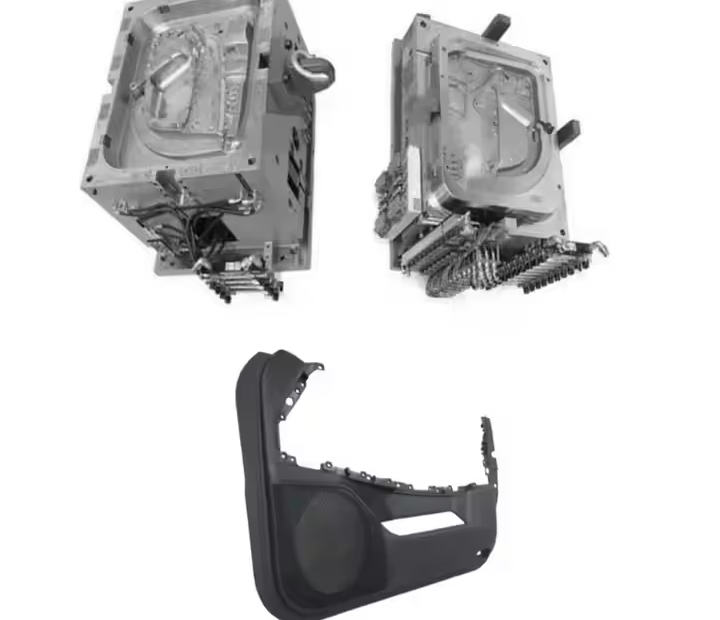
With the global scale deployment of 5G networks, the manufacturing precision of base station antenna radomes—as critical physical interfaces for signal transmission—directly determines millimeter-wave transmission efficiency, network coverage quality, and long-term reliability. These seemingly simple covers internally contain intricate structures designed for high-frequency electromagnetic wave transmission, extreme environmental resistance, and multifunctional integration.the 5G antenna radome molds, as a core tool in the manufacturing process of 5G antennas, plays an essential role. Achieving their mass production with high consistency relies heavily on the technology-intensive mold systems behind them. These systems integrate cutting-edge multidisciplinary technologies and represent the pinnacle of high-end manufacturing.
Performance Requirements for 5G Antenna Radomes and Core Challenges for Molds
5G antenna radomes are far more than basic protective shells; their performance metrics directly impact core network parameters:
- Electromagnetic Performance Requirements: In the 24GHz–40GHz millimeter-wave band, insertion loss must remain below 0.5dB, with phase distortion controlled within ±5°. Any minor geometric deviation or surface defect may cause signal scattering and coverage blind spots.
- Environmental Durability Requirements: Must withstand extreme temperature cycles (-40℃ to +85℃), 15-level wind loads, 3,000 hours of accelerated UV aging, while maintaining structural integrity in corrosive environments (e.g., salt spray, acid rain).
- Structural Precision Requirements: Internally, thin-wall reinforcement networks (0.8–1.2mm), installation snap-fits (±0.05mm tolerance), and RF sealing structures must be precisely formed, alongside strict aerodynamic contour requirements.
- Mass Production Economics: Injection cycles must be compressed below 60 seconds, with mold lifespans exceeding 500,000 cycles—imposing stringent demands on mold stability.
These rigorous requirements translate into core technical bottlenecks for mold manufacturing: Cavity precision must reach IT4–IT5 grade (dimensional tolerance <5μm); forming surfaces require optical-grade finish (Ra≤0.05μm); thermal deformation at critical zones must stay below 8μm under 200℃ cyclic thermal shock; and dimensional stability must be ensured throughout ultra-long service life. Traditional mold technologies face systemic upgrades to meet such benchmarks.
5G Antenna Radome Molds Structural Design and Multi-Physics Field Collaborative Simulation
The mold design phase has entered the era of digital collaboration, requiring comprehensive consideration of mechanical, thermodynamic, and electromagnetic parameters:
- Parametric Electromagnetic Co-Design: High-Frequency Structure Simulator (HFSS) data drives mold cavity surface modeling. Engineers translate the radome’s dielectric constant distribution and beamforming characteristics into geometric parameters, optimizing surface curvature and wall thickness to maximize millimeter-wave “transmission friendliness.” Simultaneously, gating system topology models adopt hot-runner systems with needle-valve sequential control to ensure uniform melt filling.
- Multi-Physics Field Coupled Verification: Mold flow analysis precisely simulates melt temperature fronts and shear rate distribution in complex 3D cavities, predicting and eliminating weld lines, air traps, and other defects. Finite Element Analysis (FEA) calculates stress concentration points under thousands of tons of clamping force and thermal cycles, enabling deformation compensation design. Electromagnetic performance feedback iteratively optimizes geometric models, typically requiring 15–20 iterations until warpage predictions fall below 0.15mm/300mm and maximum working stress stays under 40% of material yield strength.
- Modular System Integration: Standard mold bases (e.g., LKM standards) reduce manufacturing costs, while core forming components adopt modular designs for rapid replacement. Hot-runner systems integrate high-precision PID temperature control modules, maintaining inter-zone temperature differences below 0.5°C. Ejection mechanisms require over 32 synchronized components to achieve non-destructive demolding of complex internal structures.
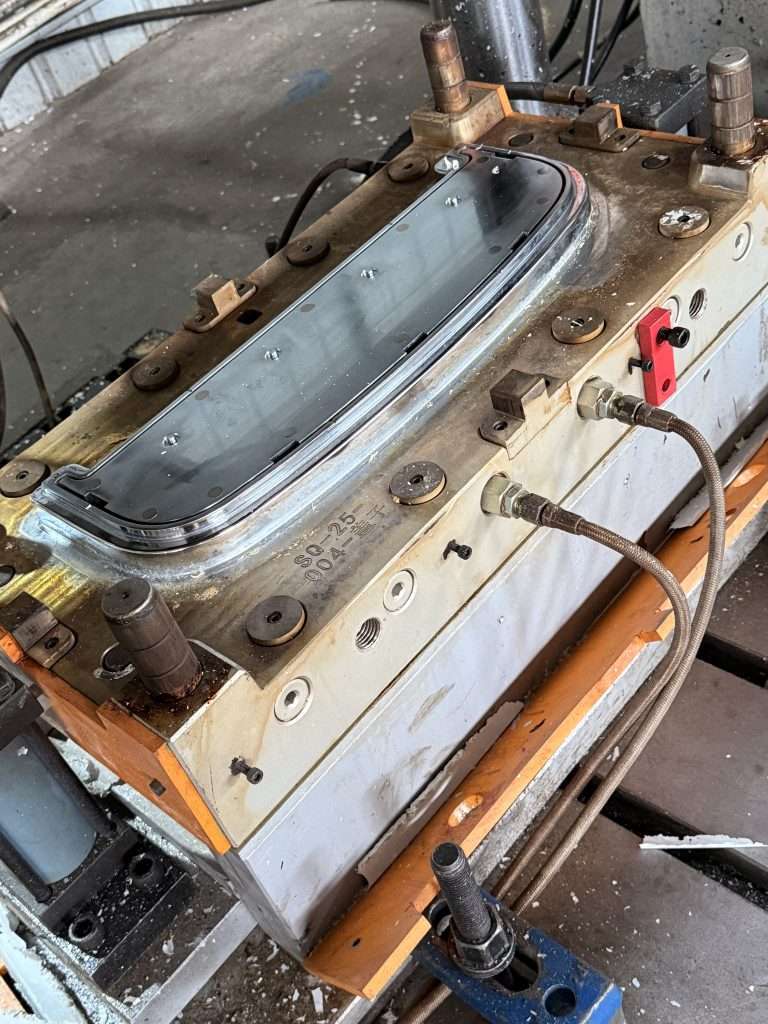
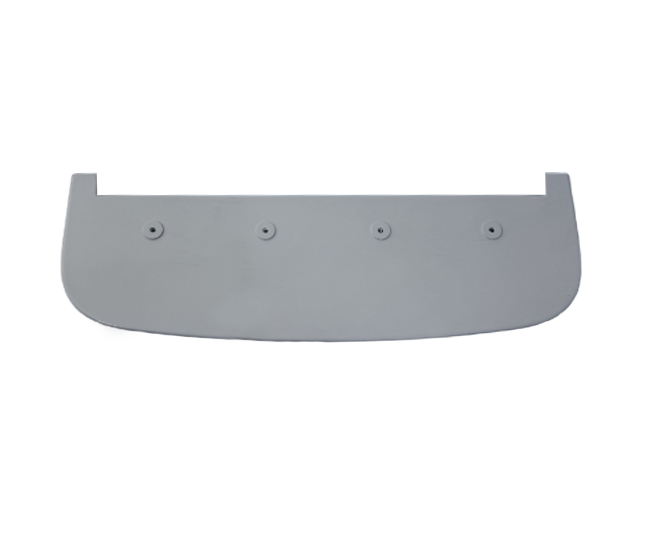
Ultra-Precision Machining and Surface Enhancement Technologies
Translating digital models into physical entities demands a comprehensive ultra-precision machining chain:
- Five-Axis High-Speed Machining Process Chain: Rough machining employs large-diameter tools (φ16mm) at 12,000 rpm (±0.05mm precision); semi-finishing switches to φ6mm tools at 24,000 rpm (±0.01mm); finishing utilizes φ0.2mm micro-tools at 36,000 rpm (±0.003mm). Deep-cavity narrow slots are processed with φ0.1mm tools at 50,000 rpm. Trochoidal milling strategies reduce tool wear, complemented by real-time in-process measurement for compensation.
- Specialty Machining Applications: For deep-slot structures (aspect ratio 15:1) unreachable by milling, mirror EDM achieves Ra 0.03μm surface quality. Precision positioning holes are cut by slow wire EDM (±0.002mm accuracy). Complex surfaces undergo ultrasonic-assisted polishing to achieve Ra 0.02μm—equivalent to optical component standards.
- Surface Enhancement Engineering: Critical forming components undergo surface treatments to extend service life. Predominant technologies include: Physical Vapor Deposition (PVD) AlCrN coating (hardness HV3200, friction coefficient 0.25); plasma nitriding creating 0.15mm hardened layers (surface hardness HRC65); and micro-arc oxidation generating 20μm ceramic layers (temperature resistance >1,000℃). These treatments significantly improve wear, corrosion, and material adhesion resistance.
data table for a 5G antenna radome molds
| Item | Description |
| 5G antenna radome molds Material | Steel |
| 5G antenna radome molds Dimensions | Length: 500 mm – 2000 mm; Width: 300 mm – 1500 mm; Height: 200 mm – 1000 mm (depending on radome size) |
| Precision Requirements | Dimensional accuracy: ±0.05 mm; Geometric tolerance: ±0.1 mm; Surface roughness: Ra 0.4 µm |
| 5G antenna radome molds Weight | 100 kg – 1000 kg (depending on mold size and structural complexity) |
| Service Life | 10,000 – 50,000 molding cycles (depending on steel type and heat treatment process) |
| Applicable Molding Process | Injection molding, hot pressing, etc. |
| Applicable Radome Materials | Glass Fiber Reinforced Plastic (GFRP), Carbon Fiber Reinforced Plastic (CFRP), engineering plastics, etc. |
| Maximum Operating Temperature | 250°C – 350°C (temperature range for steel) |
| Surface Treatment | Hardening treatment, carburizing, hard chrome plating, etc., to enhance wear and corrosion resistance |
| Cooling System | Embedded cooling channels in the mold; Cooling time: 5 – 30 minutes per cycle (depending on molding process) |
| Mold Design Features | High-precision demolding design, rib structure, vent groove design, etc. |
| Production Cycle | Mold manufacturing cycle: 6 – 12 weeks; Single molding cycle: 15 – 45 minutes (depending on molding process) |
| Applicable Equipment | Injection molding machine, hot pressing machine, etc. |
| Mold Cost | High (due to high cost of steel and difficult machining) |
Thermal Management Systems and Process Control
5G Antenna Radome Molds thermal management directly dictates production efficiency and product quality:
- Conformal Cooling Breakthrough: Metal 3D printing (SLM process) fabricates conformal cooling channels maintaining a constant 3±0.1mm distance from cavity surfaces, with minimum apertures of φ1.2mm. Compared to traditional straight channels, this boosts cooling efficiency by 40%, shortens injection cycles by 35%, and controls product temperature differentials below 3°C (vs. >8°C in conventional molds), drastically reducing internal stress deformation.
- Intelligent Temperature Control: The mold is divided into 16 independently controlled zones, each embedded with K-type thermocouples for real-time monitoring. Fuzzy PID control algorithms achieve ±0.3°C precision with <1.5-second response times. The system dynamically adjusts coolant flow to manage thermal loads during injection.
- Ejection Mechanism Optimization: For thin-wall radomes prone to deformation, a multi-stage ejection system is designed. Local gas-assisted units initially release the part, followed by synchronized force application from 32 nitrided ejector pins. Pin layout is optimized via FEA to ensure uniform force distribution. Moving parts employ self-lubricating bushings and precision-ground guide pillars (friction coefficient <0.05), ensuring 500,000 cycles without jamming.
Full Lifecycle Quality Assurance System
5G Antenna Radome Molds quality requires systematic verification and monitoring:
- T0 Trial Verification Protocol: First articles undergo full-dimensional scanning via CMM (5,000+ measurement points), with critical assembly dimensions requiring CPK >1.67. Blue-light scanning performs full-surface deviation analysis (±15μm tolerance). S-parameters are measured in anechoic chambers (18–40GHz) to validate insertion loss optimization. Environmental chambers execute 50 thermal cycles (-40℃ to 85℃).
- Mass Production Monitoring: Embedded pressure and temperature sensors monitor filling curves and mold temperature fluctuations. Data feeds into Manufacturing Execution Systems (MES), triggering alerts when parameters exceed SPC control limits. Preventive maintenance is performed every 5,000 cycles, focusing on sliding components and sealing systems.
- Lifecycle Management: Digital twin technology constructs virtual mold models, predicting remaining component life based on production data. Coating regeneration processes restore performance when surface roughness exceeds Ra 0.1μm via local repolishing and recoating.
Conclusion
5G antenna radome molds epitomize modern precision manufacturing. From electromagnetic co-design to nanoscale surface treatment, from intelligent thermal control to predictive maintenance, each phase embodies interdisciplinary breakthroughs. These molds transcend traditional tooling, evolving into high-technology systems fusing materials science, precision engineering, and information technology. As global 5G networks advance toward higher frequencies and denser deployments, continuously innovating mold technology will remain central to telecommunications infrastructure. Behind intangible data streams, it is these micron-precision molds that construct the physical bedrock of our digital world.
>>You may also like
Standards & References
The following industry standards are referenced in this article: